
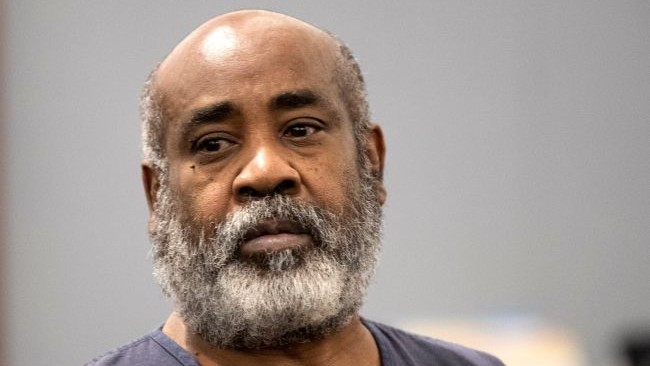

Duane “Keffe D” Davis’ Tupac murder trial is now underway in Las Vegas. Opening statements and testimony began Monday, August 17.
For three decades, the rap legend’s murder has been shrouded in mystery, conspiracy theories and anger.
The drive-by shooting on Sept. 7, 1996 not only ended the rap superstar’s life but also changed the course of hip-hop, transforming Shakur from one of the genre’s biggest stars into a global cultural icon.
Despite countless theories, the case remained unsolved for years. That changed in 2023, when former gang leader Duane “Keffe D” Davis was arrested and charged in connection with the killing.
Davis, 63, is charged with murder with a deadly weapon intended to promote, further or assist a criminal gang. He has pleaded not guilty and faces life in prison without parole if convicted.
Davis, a former gang leader, wrote the 2019 memoir Compton Street Legend: Notorious Keffe D’s Street-Level Accounts of Tupac and Biggie Murders, Death Row Origins, Suge Knight, Puffy Combs, and Crooked Cops. Co-authored with Yusuf Jah, the book details his involvement in West Coast gang culture and the fatal 1996 drive-by shooting of Tupac Shakur.
The trial is expected to take a deep dive into examining the bitter East Coast–West Coast rap rivalry and the conflict between the Bloods and Crips that shaped hip-hop — and dominated headlines —during the 1990s.
Duane “Keefe D” Davis bragged about his role as lead organizer and perpetrator of the 1996 murder of Tupac Shakur in retaliation for the rap legend’s entourage assaulting Davis’s nephew, Orlando Anderson. Prosecutors say Davis obtained and supplied the gun, though they do not claim he fired it. They’re relying heavily on his past police interviews, memoir, and public comments.
D may attempt to argue that his accounting of what heeped on that fateful night is an exaggeration concocted to promote his 2025 tell-all fiction. Investigators still lack reliable physical evidence and living eyewitnesses after nearly 30 years. The other three men allegedly in the Cadillac are dead.
Retired officers and witnesses described the shooting’s aftermath. One officer said Tupac refused to identify his attackers; another acknowledged police had no living witness who could identify the Cadillac’s occupants.
It could also feature several high-profile witnesses, including former Death Row Records CEO Suge Knight, who was driving the car when Shakur was fatally shot.
Suge Knight says he’s reluctant to testify because of loyalty, street code and distrust of both sides.
Knight—who was driving when Tupac was shot—views taking the stand and identifying someone as “snitching.” He has said his loyalty to Tupac and his personal code cannot be compromised, adding that he does not want to help or hurt Keefe D.
He also claims the prosecution’s theory is incomplete: Knight describes Tupac’s killing as a broader “assassination” involving more people, but he refuses to name them. He has warned that compelling him to testify could damage whichever side calls him because his account may conflict with both the prosecution and defense narratives.
In short, Knight isn’t saying he knows nothing—he’s saying he does not want to become the witness who helps send Keefe D to prison. If subpoenaed, however, he could still be legally compelled to appear.
Davis has pleaded not guilty. The trial is expected to last about a month, and he could receive life in prison if convicted.