
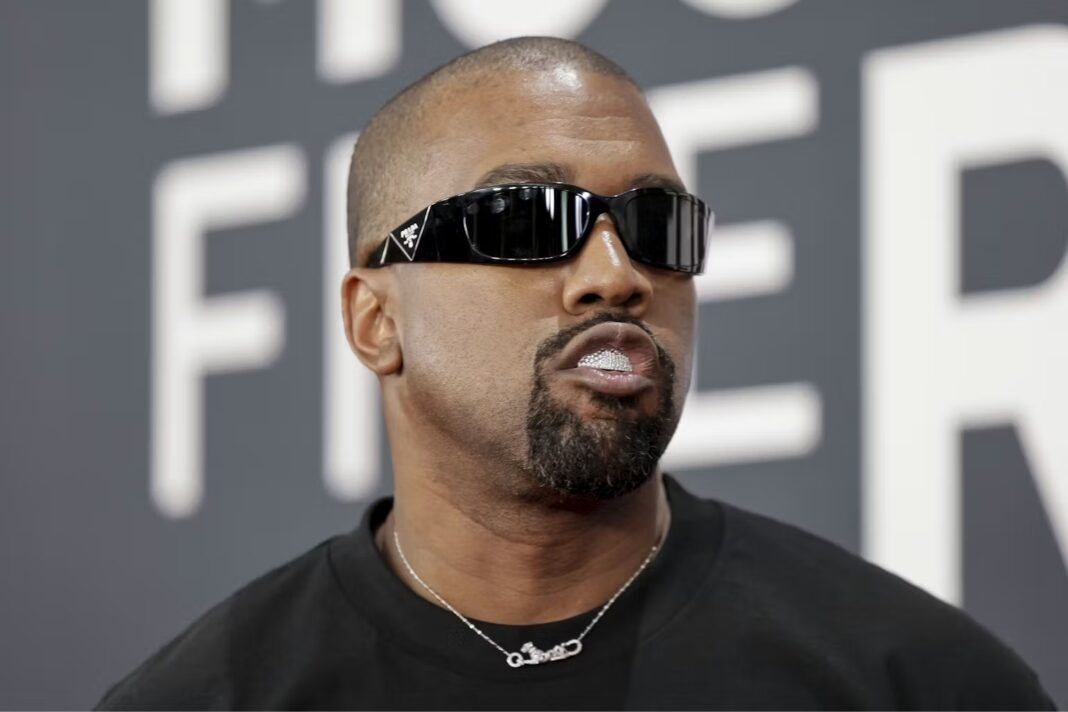

In latest developments in the saga of the complex celebrity Kanye West, the rapper/fashion designer has reportedly canceled his planned concert in Marseille, France.
The Chicago rapper released a statement to fans overseas, saying the show would be postponed.
“After much thought and consideration, it is my sole decision to postpone my show in Marseille, France until further notice,” he said.
The decision comes as France’s Interior Ministry, led by Laurent Nuñez, was reportedly considering barring West from entering the country. In his statement, West acknowledged the need to rebuild trust and demonstrate personal growth.
“I know it takes time to understand the sincerity of my commitment to make amends. I take full responsibility for what’s mine, but I don’t want to put my fans in the middle of it. My fans are everything to me. Looking forward to the next shows. See you at the top of the globe.”
Marseille Mayor Benoît Payan had previously criticized West over his past antisemitic remarks, stating in March, “I refuse to let Marseille be a showcase for those who promote hatred and unapologetic Nazism. Kanye West is not welcome at the Vélodrome, our temple of living together and of all Marseillais.”
It remains unclear if or when the concert will be rescheduled.
Onluy days earlier the UK government prevented West from entering the UK on the grounds that his presence would not be conducive to the public good. The rapper has become notorious for a sustained range of antisemitic comments, expressing admiration for Hitler and releasing a song titled Heil Hitler.
The prospect of his performing in front of 150,000 people at London’s Wireless music festival drew condemnation from government ministers, festival sponsors, Keir Starmer and the Campaign Against Antisemitism. Following the government’s confirmation that West would not be allowed to enter the UK, the festival was cancelled.
Any foreign national wanting to visit the UK needs permission to do so, either in the form of a visa or an electronic travel authorisation (ETA). Both can be refused for several reasons. The UK’s immigration rules require that people who have previously breached immigration law, or been convicted of a criminal offence in the UK or overseas, are barred from entry.
They rules also include wide discretionary powers for the home secretary to exclude individuals from the UK on the basis that their presence is “not conducive to the public good because of their conduct, character, associations or other reasons”. These are the powers that have been applied to West.
According to the Home Office, these powers are usually invoked in relation to “national security, unacceptable behaviour (such as extremism), international relations or foreign policy, and serious and organised crime”. In 2024, 15 people were excluded from the UK under these powers.
The home secretary only needs to be satisfied that the underlying behaviour has occurred on the balance of probabilities, and will follow guidance in making the decision.
This guidance was first introduced in 2005 in the context of the “war on terror”. However, the guidance also points to a wider application to disrupt a range of criminal behaviour including organised crime, football hooliganism, breaking immigration rules and corruption.
We only know that the government has excluded West on the broad basis that his “presence would not be conducive to the public good”. It is likely that the home secretary, Shabana Mahmood, relied on his “producing, publishing and distributing material … to express views which … foster hatred which might lead to inter-community violence in the UK”.
Immigration law in the UK is based on the use of wide discretionary powers and the guidance is “indicative rather than exhaustive”. This means that the home secretary can go beyond the guidance to justify exclusion and is not bound to its precise wording.
The guidance does not require that someone has incited violence to be banned, only that they have fostered hatred. Given the extremity of West’s previous public comments, it is arguable that being given a stage at a high profile music festival would contribute to the normalisation of antisemitism. In recent years, the UK has seen a rise in antisemitic violence.
For West to challenge his exclusion in the courts would require it to be found that the home secretary has misunderstood the scope of her very broad legal powers, or else made a decision so irrational that no reasonable decision maker could have come to it. This is an extremely high legal bar to surmount, and courts would be likely to give a great deal of deference to the home secretary’s decision.
Jonathan Collinson, Lecturer in Law, University of Sheffield
This article is republished from The Conversation under a Creative Commons license. Read the original article.