
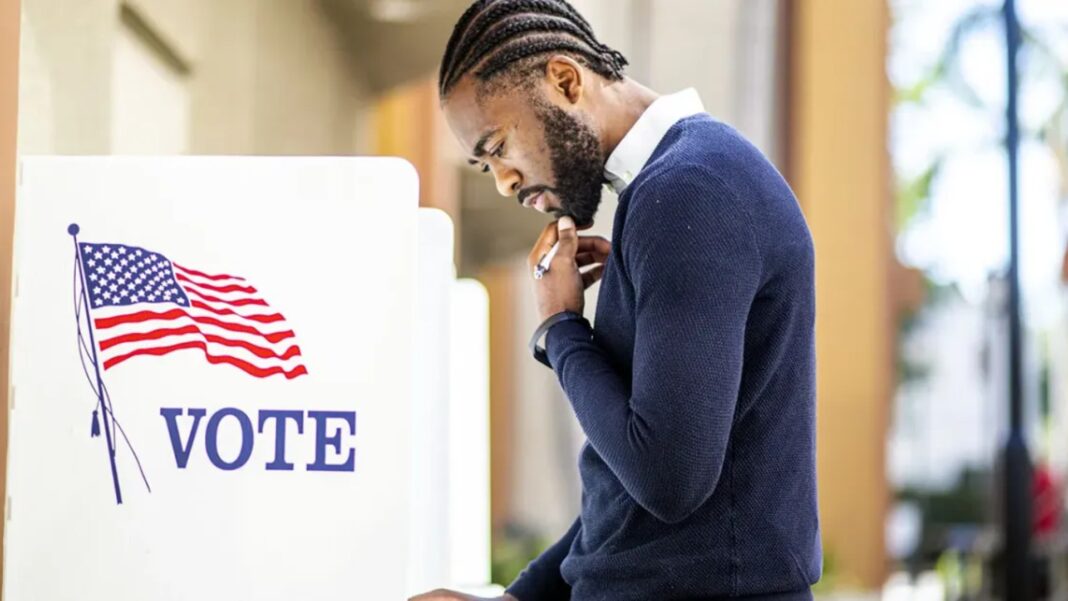

With Election Day approaching, a notable shift is emerging in Georgia’s early voting numbers: Black residents, particularly younger voters, are casting ballots at a substantially faster pace than they did during the last midterm election.
An analysis by a Democratic data firm found that early in-person voting among Black Georgians increased 33% during the first nine days of voting compared with the corresponding period in 2022. Participation among voters younger than 30 rose 54%, while the increase among young Black voters reached 80%.
The figures, first reported by The Atlanta Journal-Constitution, offer an early look at who is participating in an election that will determine Georgia’s next governor and a U.S. Senate seat.
The increase among younger Black voters stands out because midterm elections have historically presented different turnout challenges than presidential contests, particularly for campaigns seeking to engage younger residents.
Georgia’s political landscape has changed considerably in recent years. Black voters have played a central role in closely contested statewide elections, while suburban growth and shifting participation patterns have made the state’s electorate increasingly competitive.
Those changes have placed renewed attention on turnout in metro Atlanta, including Fulton and DeKalb counties, as well as communities across the state where voter registration and mobilization organizations have worked to increase participation.
This year’s ballot features Democratic Sen. Jon Ossoff seeking reelection against Republican Rep. Mike Collins. In the governor’s race, former Atlanta Mayor Keisha Lance Bottoms, a Democrat, faces Republican businessman Rick Jackson.
Both parties are investing resources in encouraging supporters to vote before November 3.
The early numbers, however, should not be mistaken for election results.
The reported increases measure ballots cast during a specific portion of the early voting period. They do not establish how voters cast their ballots, which candidates they support or whether overall turnout will ultimately exceed 2022 levels.
The analysis also comes from a Democratic-aligned firm, making its methodology and comparisons important context for interpreting the findings.
Some voters who previously waited until Election Day may simply be voting earlier this year.
Even with those limitations, the reported growth among young Black Georgians is significant as a measure of participation.
It also raises questions that will become clearer when the election concludes: Are more young residents entering the electorate, are established voters changing when they vote, and will the increase extend into Election Day?
Georgia’s early voting period runs through October 30, leaving additional time for participation patterns to develop.
For Black communities across the state, the figures highlight an electorate whose engagement is drawing increased attention in contests that will shape decisions on education, health care, economic development and federal policy.
The final measure of that participation will come when all ballots are counted.