
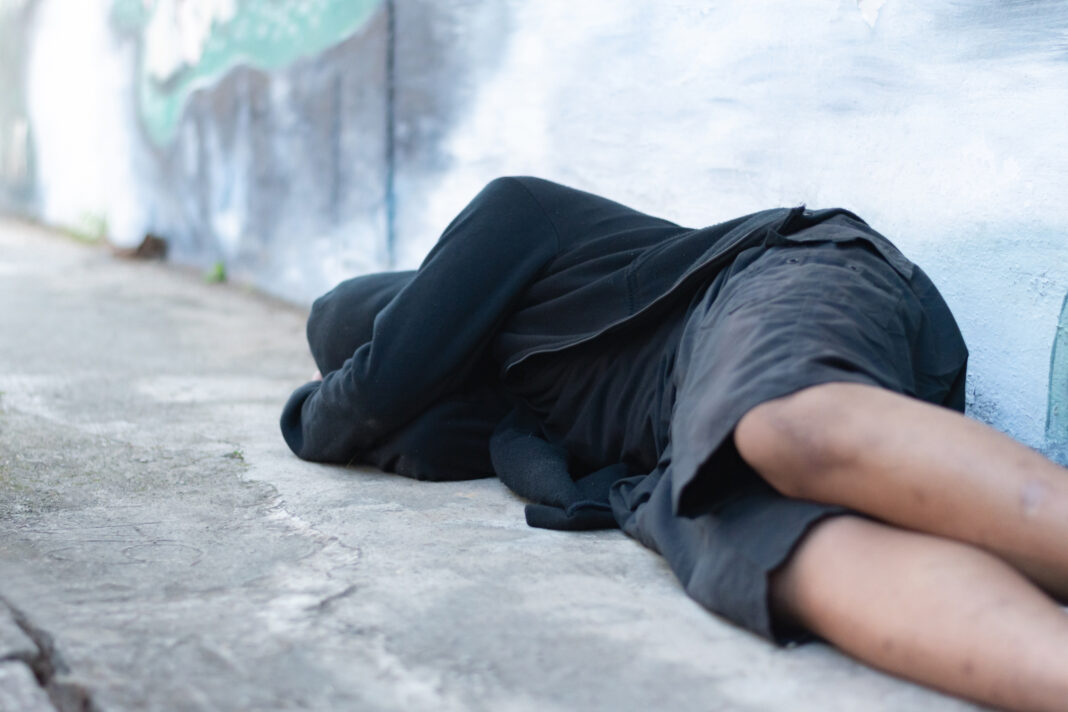

An estimated 4.2 million young people experience homelessness in the United States every year. Children in the age group of 13 to 17 account for about 700,000 of that number. In the U.S. 1 in 30 minors experience homelessness and young adults in the 18-25 age group makeup the remaining 3.6 million young people who are classified as homeless annually.
In the Atlanta metropolitan area studies show that roughly 12,000 public school students ages 13 – 17 are experiencing housing insecurity daily for a variety of reasons; including lack of affordable housing options, economic hardship, family disfunction and abuse.
These causes coupled with a complex combination of systemic gaps and the challenges of adolescent development too often result in unsafe living environments and traumatic outcomes.
The crisis disproportionately impacts minority students with approximately 71% of the unhoused being African American youth and nearly 28% being LGBTA youth.
According to figures released by Atlanta’s Covenant House, a leading organization providing hope, shelter and supportive services for teens at risk:
· 49% of youth experiencing homelessness have been sexually exploited.
· 40% of youth experiencing homelessness are LGBTQ+, despite only 7% of the general population of youth identifying as LGBTQ+. Moreover, LGBTQ+ youth are more likely to be victimized than non-LGBTQ+ youth on the streets.
· 42% of youth experiencing homelessness have experienced abuse as a child. Sixteen-19-year-olds have the highest unemployment rate of any age group, at 12.6% (more than 3x the national average) – and higher for at-risk youth.
· About 50% of youth who age out of the foster care system face homelessness within six months.
Nationwide the numbers are staggering with U.S. Department of Education reporting that more than 1.5 million children and youth experienced homelessness in the 2023–2024 school year, the highest number recorded since national tracking began. Although the numbers are not complete for the 2024-2025 school year, the count is expected to be even higher.
“When [youth] don’t have stable housing, it affects every part of their lives. It means they’re more likely to drop out of school. It means they might get involved in the justice system. They’re more likely to face long-term mental and health challenges,” explains Annie E. Casey Foundation president and CEO, Lisa Lawson.
‘Every system, from high schools to colleges to workforce programs, need to think about how they can connect young people to these basic needs, particularly stable housing, so that they can thrive,’ she added.
Lawson, author of Thrive: How the Science of the Adolescent Brain Helps Us Imagine a Better Future for All Children, outlined pressing issues facing America’s young people and discussed Thrive by 25®, the Foundation’s commitment to ensuring young people ages 14 to 24 have the resources, relationships and opportunities they need to transition successfully into adulthood.”
“We see how the safety net is being challenged at this moment with changes to Medicaid and SNAP and housing. The path to higher education gets ever more expensive and challenging for young people. AI is changing jobs … and far too many young people end up in systems like child welfare and juvenile justice, that separate them from people who love them,” Lawson explained.
Casey Foundation’s Thrive by 25® efforts are concentrated around a set of investments focused on promoting basic needs, permanent connections, education and credentials, financial stability and youth leadership for young people.
But as Atlanta’s continued economic boom marginalizes vulnerable populations, often displacing residents with limited housing options, the Casey Foundation is focusing the critical impact of housing instability on young people and emphasizing the need for creative and sustainable solutions.
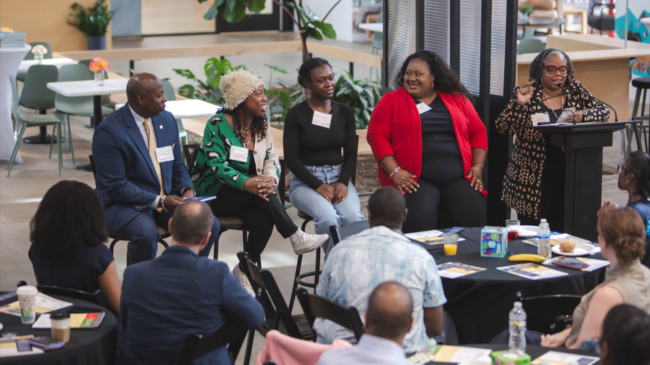
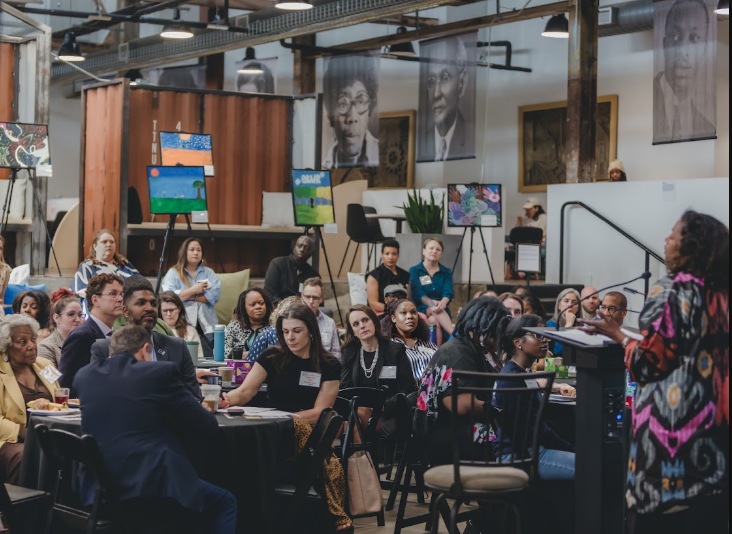
In a day-long summit – The Atlanta Thrive Summit – held at Pittsburgh Yards in southwest Atlanta, the discussion highlighted the critical impact of stable housing on young people’s lives, emphasizing the need for intentional and creative solutions.
“The stakes are extremely high, and we [have] to be more intentional, more creative. Every system, from high schools to colleges to workforce programs, needs to think about how they can connect young people to these basic needs, particularly stable housing, so that they can thrive,” Lawson explained.
During the Summit community leaders, young people and supporting organizations addressed best practices to assist young people with access to stable, affordable housing. Solutions proposed included increasing housing inventory, removing policy barriers, and implementing rent controls.
“When I started doing this work, I would say, ‘Hey, we’re focusing our work on teenagers.’ And the faces that people made the moment you said the word ‘teenager’ were honestly devastating. These are our children. These are our young people, and we cannot frown up our faces at the first sign of mentioning them in the room. They can hear us,” concluded Lawson.
Summit participants also shared innovative ideas for subsidizing rent and involving young people in policy design.
Key participants and partner organizations for the Atlanta Thrive Summit included:
The Atlanta Volunteer Lawyers Foundation, located in the Pittsburgh Yards complex, offers legal assistance to families facing housing displacement through its Standing With Our Neighbors programs. The program – which began at Thomasville Elementary school in 2016 – has made significant inroads to keeping families in their homes and has positively impacted student retention as the program has been expanded to include nine Atlanta Public Schools.
CareerReady ATL – a youth-centered workforce development ecosystem powered by United Way of Greater Atlanta. The innovative youth apprenticeship program model, creates, funds, and supports paid apprenticeships in high-demand industries, helping young people become career ready.
Partners for HOME – an Annie E. Casey Foundation supported organization that works with City of Atlanta stakeholders to ensure housing opportunities for residents impacted by homelessness and housing instability.
Atlanta Youth Action Board – a Partners for HOME component coordinates a comprehen-sive response system to fight homelessness in the city of Atlanta. Its seven-member Youth Action Board (YAB) leads focus groups with local care providers to develop a coordinated community plan to end homelessness.
Covenant House Georgia – provides food, shelter and wrap around support services for youth experiencing homelessness and escaping trafficking between the ages of 18-24.
In addition, to these organizations, the Student Basic Needs Coalition (SBNC), a national effort operating on more than 100 campuses around the country, helps college students in need navigate housing, healthcare and SNAP benefits. SBNC has unlocked more than $100 million in food assistance for young people in college. For more information please visit Thrive by 25.