

African Youth Survey 2026 finds Youth Africans warm to Trump-era dealmaking
Around 3 in 5 young Africans are optimistic that Donald Trump’s second administration will deliver a better future for their countries in areas including youth empowerment, military support, security cooperation and counterterrorism, despite having preferred Joe Biden before the 2024 US election and despite concern over the dismantling of USAID and American access to African resources.
The last edition of the survey found young Africans expected a Biden administration to be better for their countries than a Trump administration by 42% to 23% across the areas evaluated, from foreign investment and trade relations to youth empowerment and military support.
Yet the 2026 edition finds young Africans are very or somewhat optimistic that President Trump’s second administration will bring about a better future in key areas: youth empowerment and security cooperation and counterterrorism both at 60%, democracy support and trade relations both at 59%, with military support, development aid and assistance, and political support and relations all at 58%.
- African Youth Survey 2026 finds around 58-60% of young Africans are optimistic about Trump-era outcomes on youth empowerment, military support, security cooperation and counterterrorism.
- Shift comes after the 2024 survey found Biden was expected to be better for African countries than Trump by 42% to 23% and as perceived US influence jumps to 81%, ahead of China at 79%.
- Findings unexpected amid legacy of Trump-era insults about African countries, the dismantling of USAID and concern that Washington may use its power to secure access to Africa’s natural resources.
- Results reveal a generation receptive to the ‘Trump effect’ as they shift from aid politics to bargain politics: jobs, infrastructure, technology, security and economic sovereignty now matter more than diplomatic tone or Western approval.
Overall US influence has risen from 74% in 2024 to 81%, edging ahead of China at 79%, and the survey reveals a generation of young Africans that is increasingly pragmatic, impatient with dependency, and judging foreign powers less by rhetoric or ideology than by whether they can deliver jobs, investment, technology and security.
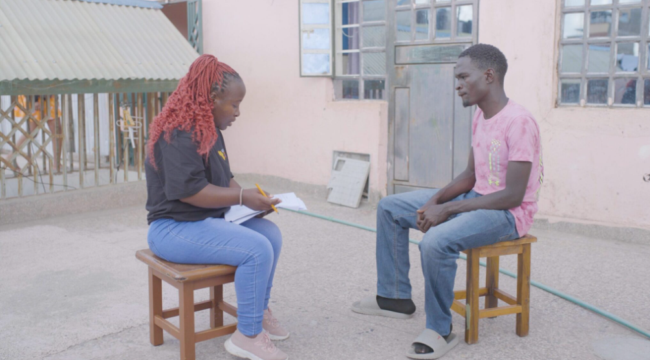
The biennial African Youth Survey was launched in 2020 by the Ichikowitz Family Foundation and is conducted by PSB Insights to give governments, business, civil society and the media a rigorous understanding of the views of Africa’s rising generation. In the largest survey yet, it has interviewed almost 5,000 young Africans across 16 countries.
The findings are striking given past criticism of African countries by President Trump, the closure of USAID and concern that Washington may use its power to secure access to Africa’s natural resources and the results did not show uncritical support of President Trump and the United States.
Some 58% worry that the United States will disregard international law and norms to gain access to natural resources in their country, rising to 70% in both South Africa and Liberia. Some 46% say USAID ceasing to operate as an independent foreign assistance agency will have a negative impact on their country, with healthcare services and disease prevention seen as the area most affected.
Nevertheless 52% still say their leaders should find a way to work with President Trump regardless of differences as young Africans separate rhetoric from results and diplomatic niceties from tangible national gain. Further to this, 26% of those surveyed say the USAID dismantling could have a positive impact by forcing leaders to confront domestic challenges directly, rising to 41% in Ghana and 40% in Nigeria, while 16% say it will have little or no impact and 11% do not know.
Ivor Ichikowitz, Founder and Commissioner of the African Youth Survey, said:
“Many in the West still do not understand why Trump appeals to young Africans. It is because he speaks the language the world actually runs on: power, interest, leverage and deals. Africa’s youth are tired of polite speeches that produce nothing. They want jobs, investment, infrastructure, security and respect. Trump does not pretend foreign policy is charity, and young Africans recognise the honesty of that.
“For them, his transactional style is not a problem. It is the point. They know every serious country fights for its own advantage, and they are asking why Africa should be the only continent expected to be grateful for lectures. This generation is not asking to be rescued. It is asking to be taken seriously. It wants African leaders who walk into every room, whether in Washington, Beijing, Brussels or Moscow, with their eyes open and their price clearly understood. In that sense, they understand Trump perfectly.”
Perceived US influence has risen during President Trump’s second administration, by 11% since 2024, but it is not uncontested. China’s influence is viewed more positively among those who say it has influence, with 95% rating China’s influence as positive compared with 85% for the United States. In comparison with 2024, China’s positive influence has increased by 13% – a significant rise. It is evident that although the Trump administration has bolstered the US’ perceived influence, it still risks losing out to China, now also viewed as the most preferred international ally by young Africans.
The US also lacks behind most of the foreign nations when it comes to its level of positive influence – only Russia has a lower positive influence than the US – in an indication that, although young Africans may acknowledge the perceived deal-making influence of the Trump administration, they are aware that it is unlikely to be driven by altruism. Notably, Russia’s perceived influence has grown sharply, from 44% in 2024 to 54% in 2026.
When asked what criteria should matter most in choosing international allies, the African Youth Survey 2026 found 55% of young Africans say their countries should prioritise alliances with powers that can deliver benefits like trade and investment, regardless of their system of government. Asked for the most important criteria in choosing an international ally, 43% choose the ability to invest in infrastructure and the economy, ahead of democratic values and a strong human rights record at 34%. Furthermore 30% emphasise access to advanced technology and knowledge transfer and 29% name military and security support.
For European governments, the message is more nuanced. The findings show the European Union is viewed positively by many young Africans and EU influence is perceived to be growing, but they also flag that appeals to democratic values and historical relationships are losing force when they are not matched by jobs, investment, technology, infrastructure and security.
French influence has dropped since the last survey from 49% to 47% and although the influence of the United Kingdom is judged to have increased, from 60% to 63%, it still trails far beyond the US and China with nations such as India and Brazil now also showing influence on the continent.
Young Africans continue to support democracy, but 56% say Western-style democracy is not suitable for Africa, while 73% still say democracy is always preferable. The findings again point to a generation seeking a more African model of governance, rooted in national unity, stability, fair elections and leaders who deliver jobs and services.
Overall, the 2026 survey found young Africans becoming more optimistic about the future. Across the eight countries tracked in every edition of the survey since 2020, 47% of young Africans say their own country is moving in the right direction, up from 30% in 2024. Some 45% say their national economy is moving in the right direction, up from 26% in 2024. Across the same tracked markets, 43% now say Africa is moving in the right direction, up from 37% in 2024.
The rising cost of living is named as the single event or development that has had the biggest impact on Africa over the past five years, selected by 27% of respondents. When asked what Africa most needs to progress, young Africans put creating new, well-paying jobs first at 27%, followed closely by reducing government corruption at 25%. Making it easier to start a business is now selected by 16%, up from 10% in 2020.
The recovery is especially striking in Ghana, Ethiopia and Zambia. In Ghana, positive sentiment about the country’s direction has risen by 51 percentage points since 2024. In Ethiopia, concern about employment has fallen by 44 percentage points while positive sentiment about country direction has risen by 44 percentage points. In Zambia, concern about employment has fallen by 41 percentage points while confidence in country direction has risen by 32 percentage points.
Further African Youth Survey 2026 data:
President Trump and the United States
- In 2024, young Africans expected Biden to be better for their countries than Trump across every tested area: 44% to 24% on foreign investment, 44% to 23% on gender equality, 44% to 23% on political relations, 42% to 23% on trade, 42% to 24% on military support and 42% to 24% on youth empowerment.
- The United States is now seen as influential by 81% of young Africans, up from 74% in 2024 and edging ahead of China at 79%. Russia’s perceived influence has risen from 44% to 54%, while India is now at 45%.
- While in the Democratic Republic of the Congo 71% say their leaders should find a way to work with President Trump, in South Africa the same number – 71% – say their leaders should stand up to him.
Aid, resources and the risks of power
- Concern over the USAID changes is highest in Mozambique at 76% and in Kenya and Rwanda at 63% each.
- Among those who expect USAID changes to have an impact, 53% say healthcare services and disease prevention will be most affected, ahead of education and training at 38%, economic development and entrepreneurship at 35%, agriculture and food security at 34% and peace and security initiatives at 27%.
Alliances and foreign powers
- A majority, 60%, say their country should build strong alliances with one or two major global powers to secure long-term benefits, while 37% prefer neutrality.
- 70% of those surveyed say the world is becoming more divided and dangerous, led by Kenya at 87%, DRC at 83% and Nigeria at 81%.
Jobs, democracy and African agency
- Optimism about national economic direction is highest in Burkina Faso at 83%, Rwanda at 79% and Somalia at 79%.
A full copy of the report can be downloaded here: https://zbek.sharepoint.com/:f:/s/Zebek/IgAGw0W646VJTop1jRPUKCJxAeT5Z4RPUIhkf9nuwBLupII?e=eiPAwY
African Youth Survey 2026 photographs, videos and animations can be downloaded here: https://zbek.sharepoint.com/:f:/s/Zebek/IgA6W18vccCOS4r8wgFu2GiVATyg3EG31bB6TpR2jZ1-3CA?e=6hNwlHAbout the African Youth Survey
The most comprehensive study of its kind to date, the African Youth Survey 2026 gives a voice to one of the world’s most consequential demographics, providing young Africans with the opportunity to share their opinions, experiences and ambitions with the world.
Since its inception in 2020, the Survey has become a valued resource for policymakers, media and stakeholders seeking high-quality research on the issues that matter most to Africa’s youth. Research is conducted by PSB Insights, a global insights consultancy, and since 2020 the survey has covered 28 countries with over 18,000 face to face interviews.
Interviews were conducted in March 2026. Approximately 300 interviews were carried out per market, with a 50:50 male to female sample split. Respondents were nationals of the country surveyed aged 18-24 and were offered the survey in local languages. No incentives were offered as part of the research.
Where 2026 African Youth numbers are shown on their own, this includes all countries surveyed for this year’s research: Burkina Faso, Chad, Congo Brazzaville, Democratic Republic of the Congo, Ethiopia, Ghana, Kenya, Liberia, Mozambique, Nigeria, Rwanda, Somalia, South Africa, Togo, Zambia and Zimbabwe.
Comparisons of change between 2020, 2022, 2024 and 2026 are shown only among countries that have been researched in every wave of research, which are Congo Brazzaville, Ethiopia, Ghana, Kenya, Nigeria, Rwanda, South Africa and Zambia.