

By Andrew Cain
Every year, thousands of hopeful applicants compete for admission to colleges and universities across the country. Acceptance letters are celebrated, rejection letters are mourned, and families proudly share milestones on social media. Yet in 2026, one of the most coveted admissions decisions in America is not coming from Harvard, Yale, or Stanford. It is coming from Streamer University.
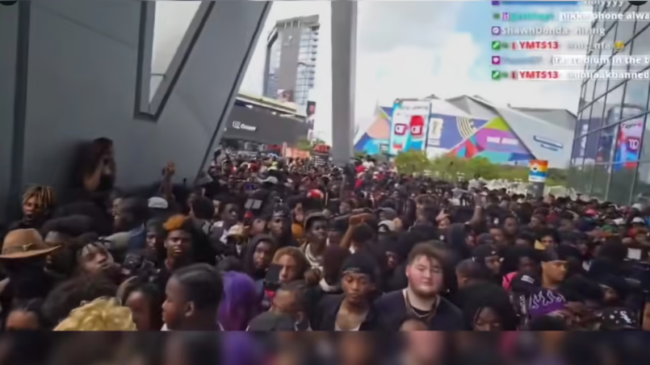
The annual content creation academy organized by Kai Cenat has evolved from an internet novelty into something far more significant. This year, aspiring creators traveled from across the country for in-person auditions in cities including New York, Los Angeles, and Atlanta. The crowds grew so large that the overwhelming majority never made it through the doors. Predictably, critics were quick to respond. Many questioned why anyone would devote such extraordinary time and energy to a content creator’s event.
If young people are willing to stand in line for days, the argument went, why not just put that same energy into a job application or two? But that reading may be too simple; it assumes a version of the economy that no longer exists.
The appeal of Streamer University is not confusion, it is fluency. For decades, the path to advancement was broadly understood: education led to work, work to experience, and experience to stability. Today, that legibility has weakened. In a world where an unknown creator can reach millions overnight and “content creator” has become a legitimate career skill, the promise of rapid visibility can appear more tangible than the slow accumulation of credentials. Streamer University therefore looks less like a fantasy than a reflection of an economy in which success increasingly feels less like climbing a staircase and more like scratching a winning lottery ticket.
If Mega Millions had a campus, it would probably look like Streamer University. Admission itself carries symbolic weight. Accepted participants announce their selection on Instagram, TikTok, and elsewhere with a level of enthusiasm that rivals elite college admission. Selection signals not just attention, but proximity to opportunity. That proximity has become its own kind of currency, convertible into opportunity, income, and influence.
In an era where visibility itself functions as currency, even a brief interaction, a well-timed exchange, or a flash of personality can secure a previously unknown creator an indelible place in internet culture. Streamer University also offers structured access to that ecosystem of influence.
Kai’s streams have featured some of the most recognizable figures in entertainment, sports, and popular culture, including LeBron James, SZA, Chris Brown, and Kevin Hart. To be admitted is to move one step closer to that world. Participants are not simply seeking followers; they are seeking relationships, collaborations, and visibility at scale. In that sense, Streamer University functions less like a traditional educational institution and more like a creator economy analogue to a premier industry conference, bringing together aspiring creators, established influencers, and the networks that connect them.
Ambitious people have always sought proximity to the rooms where decisions are made and visibility is allocated. What has changed is not the impulse, but the medium through which it is pursued. This phenomenon also reveals something about contemporary American aspiration. In the ESPN documentary “Saturdays in the South,” legendary Alabama football coach Paul “Bear” Bryant reflects on his childhood in poverty. He famously recalled that there was only one bus out of town: a football bus. The line resonated because it captured a broader truth about mobility. For many young people in underprivileged communities, athletics once represented the most visible path to a different life.
Today, a different bus waits at the station. It may be a streaming bus, a YouTube bus, a TikTok bus, or an influencer bus. The destination is recognition, financial security, and upward mobility. Content creators now occupy cultural space once reserved for movie stars and professional athletes. They command enormous audiences, generate substantial wealth, travel the world, and wield influence that would have been difficult to imagine even a decade ago. Their success is relentlessly visible, which makes it feel both attainable and urgent. Perhaps that is why the criticism directed at Streamer University often feels slightly beside the point. Beneath the jokes and skepticism lies a set of anxieties that is older than the platforms themselves.
Young people are not merely chasing fame. They are searching for opportunity, recognition, and a sense of entry into systems that feel increasingly closed. Streamer University resonates because it reflects an enduring aspiration: the desire for a better life. It offers access to networks, visibility, and the tantalizing possibility of instant transformation. And after considering the long and familiar distance between education and attainment in more traditional fields, it is not difficult to see why the appeal endures. Harvard, after all, still does not invite applicants to audition.