
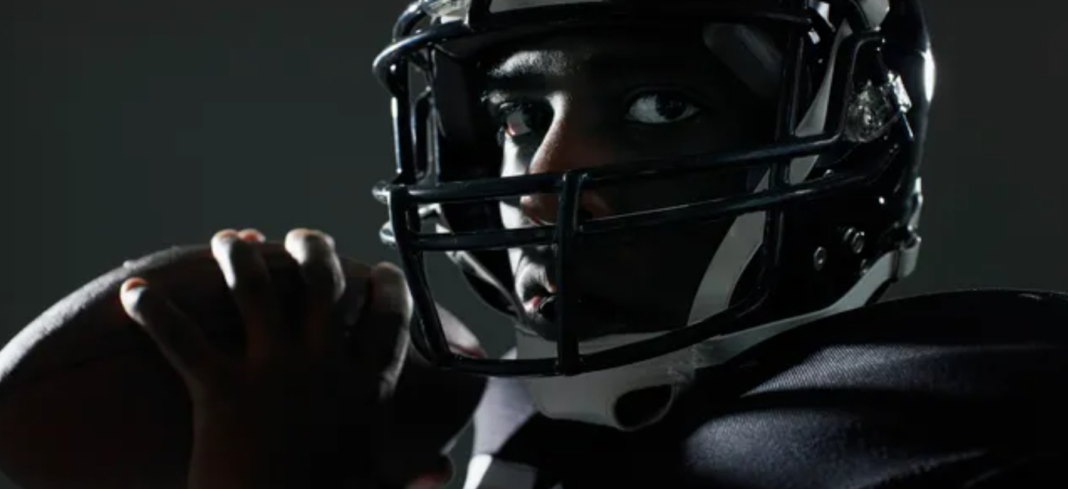

Supporters of an athlete boycott say schools in states accused of gerrymandering should not benefit from Black athletic talent without protecting Black voting rights.
A controversial Supreme Court ruling on voting rights is fueling calls for Black athletes to boycott powerhouse college programs in Southern states accused of diluting Black political power. Supporters say Black athletes could wield the same economic leverage that once helped integrate college sports itself. This article originally appeared in The Houston Defender.
America — particularly Black America — is at a difficult crossroads that literally threatens the complexion of our nation.
Last month’s Supreme Court ruling that blew up Section 2 of the Voting Rights Act of 1965, allowing states to redistrict and gerrymander to dilute the vote of Black Americans, threatens to set our voting rights back significantly, especially in the South, if we don’t do something.
Sure, we protest, we can scream, and just be pissed off.
But our real fighting power is in showing up at the voting polls like never before and withholding our buying power where our vote isn’t respected.
We also have another power that is sure to get the attention of white folks who don’t think we should have a say in this country’s political landscape. It’s through our gifted young Black athletes, whom they love to cheer for in the uniforms of their favorite college athletic teams.
In the wake of the Supreme Court’s 6-3 ruling in the Louisiana vs Callais case, Black people are calling for the top Black athletes to avoid playing for any primarily white college or university in the South. The calls have come from athletes, journalists, and even celebrities like actor and New Orleans native Wendell Pierce to boycott the Southeastern Conference in particular.
We’re talking kids boycotting programs in Florida, Louisiana, Mississippi, Alabama, South Carolina, Georgia, Tennessee, and Kentucky — places where the Black vote is being diluted. And yes, that includes Texas, where your beloved University of Texas and Texas A&M will be affected.
We Black Texans have had a front-row seat to how gerrymandering can cripple the Black vote, and specifically in Houston, where Donald Trump commanded Gov. Greg Abbott, his good soldier, to find him five congressional seats ahead of the upcoming midterm elections. And right now, we have lost a Black seat in Houston and forced two candidates – Christian Menefee and Al Green – with similar liberal leanings into a fierce, nasty battle that will weaken Black political influence in this state and the country.
I say, go for it and make these offending states suffer where it hurts. But don’t stop at the SEC. Extend it to schools in the Big 12 and ACC conferences, in states where people want to cheer for Black athletes on the football field but don’t want them to have true representation in Congress, the Senate, or even their more influential local elections.
Let’s not pretend this isn’t an enormous ask, especially in today’s major college landscape, where football and basketball athletes are able to legally make life-changing sums of money through name, image and likeness deals. But know that similar NIL and revenue-sharing riches will be awaiting you in states where your vote still matters and carries real weight.
It’s time Black athletes understand their influence and power. It’s time they free themselves from being viewed as glorified gladiators who perform for people who don’t respect them as equals or as real human beings, for that matter.
As one of the last football conferences to integrate, the SEC messed around and found out back in the 1960s that it couldn’t stay relevant without Black athletes, so the good ole boys had to start accepting Black athletes. If the SEC felt the pressure then, imagine what it would feel today if the best Black athletes in the South suddenly started heading North or going out West.
Saturday afternoons just wouldn’t feel the same, and the SEC’s TV partners wouldn’t feel the same, either.
It was funny to hear recently hired Lane Kiffin throwing a barb at his former employer, Ole Miss, saying that it was hard to get Black athletes to want to come there because of the lack of diversity.
We used to have a saying where I’m from up North: If that ain’t the pot calling the kettle black. Somebody tell Kiffin it ain’t any different for Black people in Louisiana.
Imagine if young Black student-athletes and their families did start to align their recruitment with the consciousness of what kind of power play that would be. The natural destinations would be in the North and West, but what about HBCUs?
Back in the day, schools like Grambling State and Florida A&M boasted powerhouse football programs because the all-white SEC wasn’t an option for the best Black student-athletes.
Imagine what Prairie View head football coach Tremaine Jackson or Texas Southern coach Cris Dishman could do if the recruits who would have ordinarily gone to UT or Texas A&M suddenly landed in their laps. No, the amount of money they could make at the bigger schools might not be there, but the NIL and revenue-sharing pots would be significantly larger than they are today.
It’s time that Black athletes and their families understand their power and influence and then use it.