
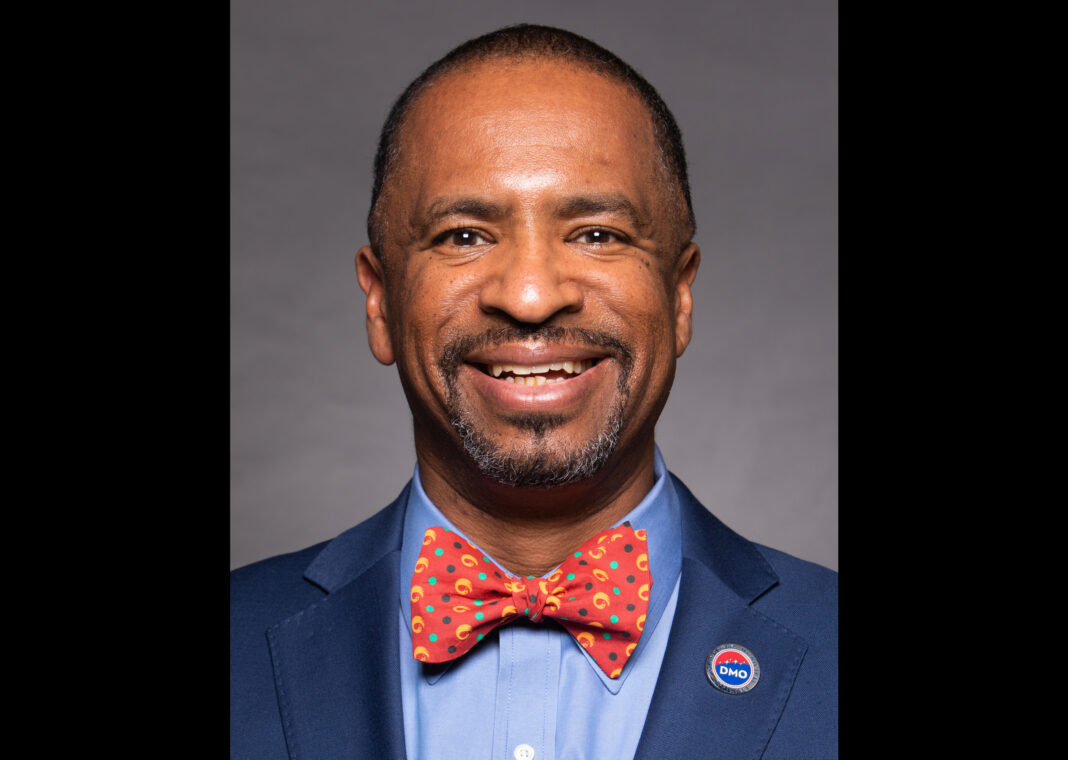

By Scott Benson, Detroit City Councilmember
You cannot turn on the news these days and not see a story about how a community is fighting against data centers. These large facilities store and process massive amounts of data that is used to power a lot of aspects of our lives – cloud computing, streaming, and the ever-growing artificial intelligence (A.I.) that is becoming increasingly embedded in our daily lives.
According to the MIT Sloan School, A.I. is poised to transform the global economy, with projections suggesting it could add $7 trillion to $15.7 trillion to global GDP by 2030, driven by rapid advancements in automation and infrastructure, including chips and data centers.
I feel Detroit needs to be competitive in this sector. Our city has a long history as home to creators, innovators, and inventors. The A.I. boom is here, and we must be ready for it.
This is why I asked the city to slow down on siting data centers. It wasn’t because I am opposed to them; I’m neither for nor against data centers in Detroit. All I want is for us to learn more so we can make educateddecisions about sensible community informed zoning regulations for the location of these facilities in our city.
The city council approved, on a 6-2 vote, my resolution requesting the mayor implement a moratorium on data centers. With or without this pause, I am gathering a wide spectrum of stakeholders – city officials, business representatives, utility company leaders, and advocates for sustainability and the environment – so that we can all have robust and thoughtful discussions about how to best regulate data centers so they do the least harm to our people, our natural resources, and our city.
We recently met as a group for the first time with 40 people in attendance. During this introductory meeting, I set the stage for the work I want this group to accomplish – a commonsense community-informed framework that regulates data centers. We will continue to meet over the next several months with the goal of implementing a zoning ordinance that regulate data centers by the end of 2026.
If you have been following the debate across the US about data centers, you know they have positive and negative impacts on communities. The positive impacts include bringing high paying construction and trades jobs to the community while the facility is being built, and an increase in local tax revenue. The negatives are the potential impact to the environment and an increased strain on the energy grid Data centers use a tremendous amount of water in their cooling systems, which makes Michigan and the other Great Lakes states an attractive place to build data centers. They also use a significant amount of electricity. In some communities where data centers have been built, utility costs have soared for residential customers as utilities scramble to build and upgrade infrastructure to support a data center. Data centers also arenoisy. People living near them often complain about the noise and its impact on the value of their property.
Many of these problems are associated with hyperscale data centers, which are massive facilities usually exceeding 1,000 acres of land, which is something Detroit cannot offer. Hyperscale data centers are used by such companies as Microsoft, Google, Amazon, and Apple. However, we can accommodate smaller facilities, but they also have the same pros and cons of hyperscale data centers – positive economic benefits and negative environmental impacts.
How the city balances the opportunities and challenges that data centers present will be critical.
I’ve made it clear to the stakeholder’s group that utility bills cannot increase for our residents. I’ve also made it clear that we must lean into the sustainability issues, particularly around water usage, and find a way to ensure we aren’t damaging our natural resources. The expansion of data centers in the Great Lakes region creates a strain on local water resources. It’s been estimated that less than a third of the data centers nationally are tracking their water usage. Fortunately, Detroit requires buildings over 25,000 square feet to track and report their water usage as part of my Energy and Water Benchmarking Ordinance, passed in2023. We should be requiring that as the state which is literally defined by water.
I encourage residents to stay informed and follow my office on this issue. It is critical to the future of our city and state.
Hon. Scott Benson is a Detroit City Councilman who represents the 3rd District on Detroit’s north eastside. Scott also serves his community by sitting on numerous boards, is an avid cyclist, and a proud husband and father.