
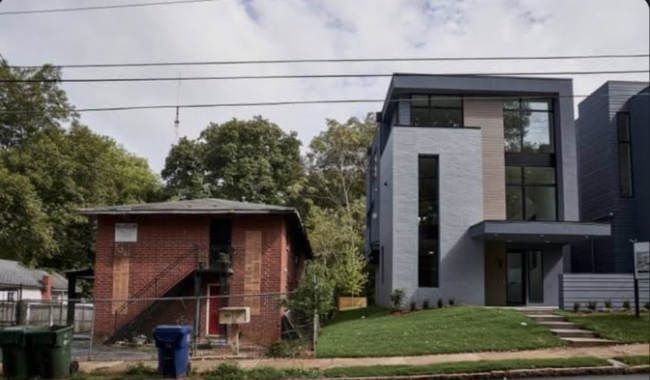

Atlanta is pretty far along in the gentrification process—but it’s uneven and neighborhood-specific.
According to the National Community Reinvestment Coalition’s report, metro Atlanta ranks fourth among areas where gentrification eliminated majority-Black census tracts from 1980 to 2020.
Out of the 31 tracts that were majority-Black in 1980, nearly half of those 31 tracts no longer fell within that category in 2010.
Short version: it’s significant, ongoing, and reshaping the city, especially on the east and west sides.
Neighborhoods like Old Fourth Ward, East Atlanta, Reynoldstown, Kirkwood, and parts of the West End/Westside have seen big waves of redevelopment. The BeltLine is a major driver—property values and rents around it have surged.
In addition historically Black neighborhoods are experiencing displacement as housing costs rise and property taxes increase. There’s been a noticeable demographic shift, with some areas flipping from majority Black to majority white over the past 10–15 years.
Atlanta is often cited as one of the most rapidly gentrifying cities in the U.S. Some studies have found tens of thousands of Black residents displaced from central neighborhoods since the early 2000s.
Atlanta also ranks fifth in the number of majority-Black Census tracts that became majority-white.
From 1980 through 2020, 22,149 Black residents were displaced from 16 majority-Black census tracts.
During that span, 22,965 white, 2,414 Asian, and 1,672 Hispanic people moved into those same areas.
Mitchell said Atlanta’s Old Fourth Ward neighborhood is an example of a community that’s undergone a complete racial transition.
Neighborhoods like Edgewood and East Atlanta are following suit, he said.
- Large parts of south and southwest Atlanta remain less affected (for now).
- Gentrification is corridor-based—it follows transit, trails, and investment zones rather than happening everywhere at once.
Big tension:
- Growth vs. displacement
- Revitalization vs. cultural erasure
Here’s a current, neighborhood-level snapshot of how gentrification is playing out in Atlanta (roughly 2022–2026 trends):
Eastside (most advanced)
- Old Fourth Ward / Inman Park / Reynoldstown
- Fully gentrified at this point.
- BeltLine proximity → luxury apartments, high-end retail.
- Median home prices and rents are among the highest in the city.
- Little remaining affordability.
- Edgewood / Kirkwood / East Lake
- Still gentrifying but largely transitioned.
- Mix of longtime residents + newer higher-income homeowners.
- Property taxes and flips continue pushing change.
Westside (fastest change right now)
- West Midtown
- Essentially complete transformation.
- Industrial → upscale (tech offices, luxury lofts, restaurants).
- One of the most expensive rental markets now.
- Vine City / English Avenue
- Major investment push (Microsoft campus plan—even though paused, it sparked speculation).
- Investors buying property early → rising prices.
- Still lower-income today, but clearly in transition.
- Bankhead / Grove Park
- Early-to-mid stage gentrification.
- BeltLine westside trail + park investments driving attention.
- Increasing outside buyers and new builds.
- West End
- Rapid change in last 3–4 years.
- BeltLine access + historic housing stock attracting buyers.
- Visible tension between preservation and redevelopment.
- Oakland City / Adair Park / Capitol View
- Among the hottest “next wave” areas.
- Flips, infill housing, rising rents.
- Still relatively more affordable—but shrinking fast.
- Peoplestown / Summerhill
- Big shift tied to Georgia State stadium redevelopment.
- New townhomes, retail, student-oriented housing.
- Longtime residents feeling cost pressure.
- Lakewood Heights
- Early signs: investor activity, scattered new builds.
- Not fully gentrified yet, but clearly on the radar.
- BeltLine effect (still dominant)
- Expansion of trails continues to “pull” investment into new areas.
- Each completed segment tends to trigger a price jump nearby.
- Investor-driven buying
- More out-of-state and corporate investors buying single-family homes.
- Turning them into rentals → less ownership access for locals.
- “Leapfrog” gentrification
- As core eastside gets too expensive, buyers jump west and southwest.
- That’s why areas like West End and Oakland City are heating up fast.
- Tax pressure
- Even homeowners not selling are being pushed by rising property taxes.
- This has accelerated displacement more quietly than rent increases.
- Cultural shift
- Loss of historically Black-owned businesses in some corridors.
- At the same time, growth in new restaurants, breweries, and mixed-use developments.
The bottom line is that Atlanta’s eastside has nearly completed it’s transformation, the westside in in a rapit transformation period now, and the South
rapidly transforming now
- Southwest/South = next wave forming