
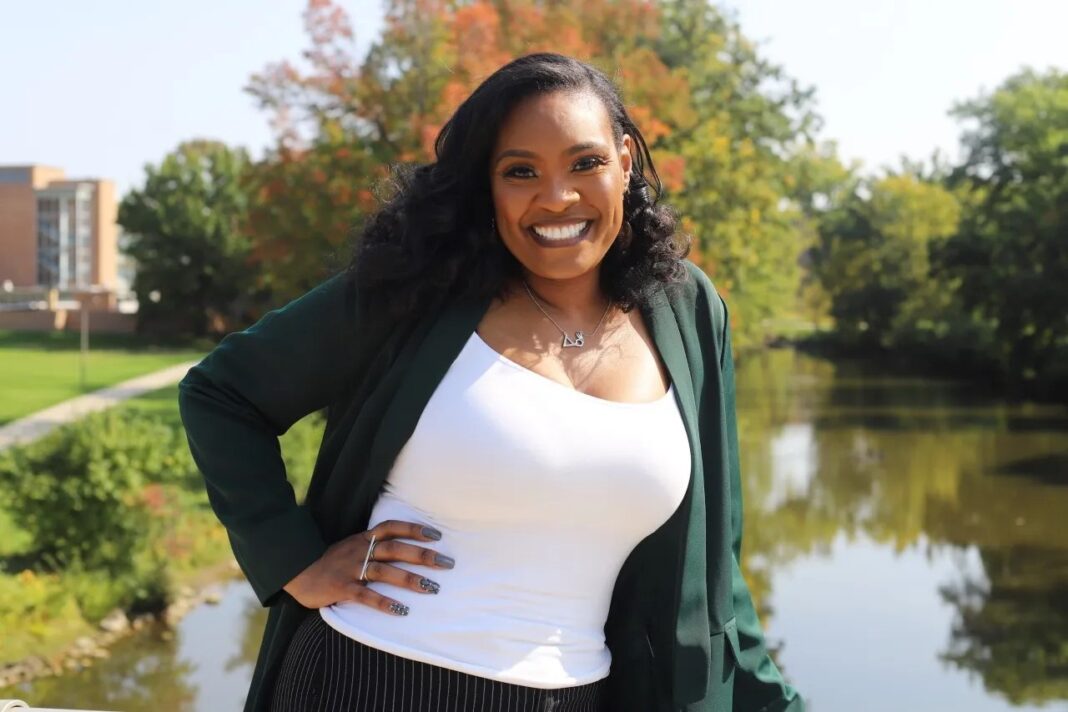

Dr. Rema Vassar, Michigan State University Trustee
This Sunday, Michigan Democrats will gather for the state convention. Alongside familiar races for governor, legislature, and Congress, voters will also decide who serves on the governing boards of Michigan’s three largest public universities: the University of Michigan, Michigan State University, and Wayne State University.
Most people skip right past these races. That is a mistake we can no longer afford.
Michigan is one of only seven states in the nation where university governing boards are elected by statewide vote rather than appointed by governors or legislators. That means Michigan voters—especially Black voters—have direct power to determine who governs our public universities. And right now, that power has never been more urgent to exercise.
Our universities are under attack. The Trump administration has launched an unprecedented assault on diversity, equity, and inclusion programs nationwide, threatening federal funding and demanding that universities dismantle support systems for Black students, faculty, and staff. And instead of resisting these illegitimate threats, governing boards at the University of Michigan and Michigan State University have conceded—gutting programs, removing “diversity” from job titles, and abandoning the students who need institutional support most.
The University of Michigan, was first. The board voted to end DEI programs after Trump’s toothless executive order and a flimsy letter lobbed empty threats to cut their funding. Students, faculty, and staff lost critical support systems and faculty are calling on administration to put back what was taken. DEI was working.
At Michigan State University, the betrayal has been even more blatant. The board removed “diversity” from the Vice President’s title and gutted funding for student organizations serving Black students, and one Board member publicly praised administrators for dismantling equity programs.
I have written extensively about MSU’s pattern of anti-Black racism and institutional betrayal. As an elected MSU trustee who has been censured, excluded from meetings, and publicly attacked for demanding accountability, I know firsthand what happens when boards prioritize political cover over student wellbeing.
But here is what too many people do not understand: university governing boards control billions of dollars in public funding, set institutional priorities, hire and fire university presidents, and determine whether students from marginalized communities receive the support they need to thrive—or whether they are abandoned to navigate hostile environments alone.
When boards vote to gut diversity programs, Black students lose mentorship, scholarships, mental health support, and safe spaces to organize and advocate for themselves. When boards remove “diversity” from leadership titles, they signal that equity and inclusion are no longer priorities. When boards praise administrators for dismantling support systems, they tell Black students, faculty, and staff: you do not belong here.
This is not abstract. This is not symbolic. This is about whether our children can afford college, whether they graduate with manageable debt, whether they see themselves reflected in faculty and leadership, and whether they experience universities as places of belonging or battlegrounds where their humanity is constantly questioned.
So what do we do?
First, we show up at the Democratic Convention this Sunday and vote for candidates who have defended Black students, faculty, staff, and administrators—not those who voted to dismantle the programs that serve us.
Second, we research voting records. Some candidates running for university boards have voted against diversity initiatives, supported the removal of equity language, or publicly praised administrators for gutting student support programs. We do not reward politicians who betray Black people.
Third, we demand that candidates commit—publicly and specifically—to restoring funding for identity-based student organizations, requiring disaggregated data on student outcomes, protecting diversity officers and equity programs, and holding administrators accountable when they harm Black students.
And fourth, we recognize that university board elections are not minor races to be ignored. They are power. They determine who governs the institutions that educate our children, employ our communities, and shape Michigan’s future.
Black voters built the infrastructure that makes Michigan Democrats competitive statewide. We organize, we mobilize, we deliver. And we deserve elected officials—at every level, including university boards—who recognize our value, defend our presence, and commit to our support.
We belong in Michigan’s public universities. We make these institutions better. Our excellence, our scholarship, our leadership, and our advocacy strengthen every campus we enter. And we deserve governing board members who know that—and who will fight to prove it through policy, funding, and institutional accountability.
The Michigan Democratic Convention is this Sunday. University board races are on the ballot. Black students, faculty, staff, and communities are hanging in the balance.
Show up. Vote for candidates who defend us. Reject those who have betrayed us.
Because knowledge is power. Power is freedom. And we do not reward those who try to take either away.
—
Dr. Rema Vassar is an elected member of the Michigan State University Board of Trustees, a Full Professor of Educational Leadership at Wayne State University, and the Founder and CEO of the Sankofa Scholarship Collective. Her views are her own.